
How Much Contingency Should You Budget for a Renovation?
Why renovation budgets blow out, how much contingency to hold back, and the specific surprises that turn up in older Newcastle and Hunter homes.
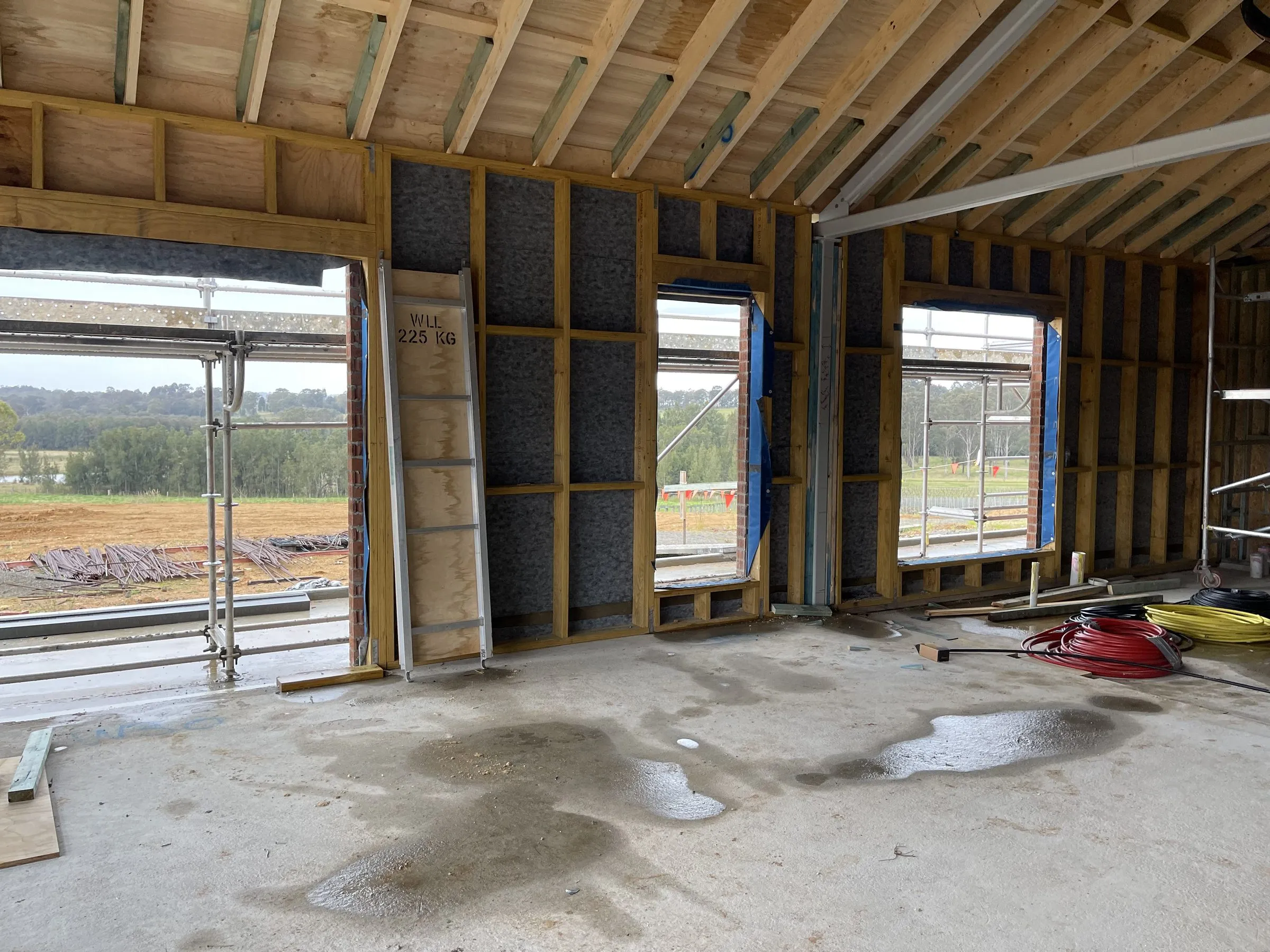
Every renovation article says hold a contingency. Almost none say how much, or what it is actually for. Here is the practical version.
How much to hold
- New build on a clear site: 5%. Few unknowns. Most risk is weather and material pricing.
- Extension onto an existing house: 10%. The unknown is the junction between old and new.
- Renovation of a post-1990 home: 10 to 12%. Construction methods are documented and predictable.
- Renovation of a pre-1980 home: 15 to 20%. You genuinely do not know what is behind the walls.
- Anything pre-1950 or heritage: 20 to 25%. Assume something will surprise you, because it will.
Hold it separately, and do not treat it as budget for upgrades. The moment your contingency becomes the stone benchtop fund, you have no contingency.
What it actually gets spent on
Termite and rot damage. Extremely common across the Hunter. You open a wall and find the bottom plate has gone. It is not a catastrophe, but it is a day of work and materials nobody priced.
Asbestos. Anything built or renovated before 1990 may contain it, in eaves, wet area sheeting, vinyl backing or fencing. Licensed removal is expensive and legally required. This is the single most common contingency spend we see.
Old wiring. Rubber-insulated cable, no earth, or a fuse board that cannot take another circuit. Once an electrician sees it, some of it has to be brought up to standard.
Plumbing. Galvanised pipe that has rusted internally to a fraction of its bore, or cast iron drainage that cracks the moment it is disturbed.
Non-existent footings. Older additions were sometimes built on very little. If you are tying new work into them, that has to be addressed.
Out-of-level and out-of-square. Old houses move. When your new square extension meets a wall that is 40mm out over its length, someone has to resolve that, and it takes time.
Reducing the unknown before you start
You cannot eliminate surprises but you can shrink them:
- Get an asbestos inspection before demolition on any pre-1990 house
- Have an electrician assess the switchboard and wiring early
- Lift a floorboard or two and look at the subfloor
- Get the engineer to inspect footings rather than assume
- Ask the builder to open up a small section of wall during quoting
A few hundred dollars of investigation up front regularly saves five figures of variation later.
What to do when a surprise appears
Ask for it in writing: what was found, what it costs to fix, what happens if you do not. Get photos. A good builder will show you the problem before covering it up.
Be wary of a variation that arrives without explanation, and equally wary of a builder who never finds anything on an old house, because that sometimes means they are building over problems rather than fixing them.
The honest summary
If you cannot afford the project with a 15% contingency on an older home, you cannot comfortably afford the project. Better to know that at the planning stage than at week six.
We work on plenty of older homes around Newcastle and the Hunter, and we would rather tell you what we expect to find before we start.
More building advice
What Does a Deck Cost in Newcastle?
Deck costs in Newcastle and Lake Macquarie by material and height, plus the site factors that quietly double the price of an elevated deck.
Bathroom Renovation Costs in Newcastle
Realistic bathroom renovation costs for Newcastle and Lake Macquarie homes, why waterproofing is not the place to save, and what changes the price.
How Much Does a Home Extension Cost in Newcastle?
Real cost ranges for home extensions in Newcastle and Lake Macquarie, what drives the price up, and where the money actually goes in a typical build.